
What Would It Take to Improve the Infrastructure of Tofu Making?
Tofu makers want equipment that can reproduce the qualities their customers value. But translating those qualities into reliable production takes more than replacing handwork with machines. A conversation with Lin Yingyi, president of Kangdeli.
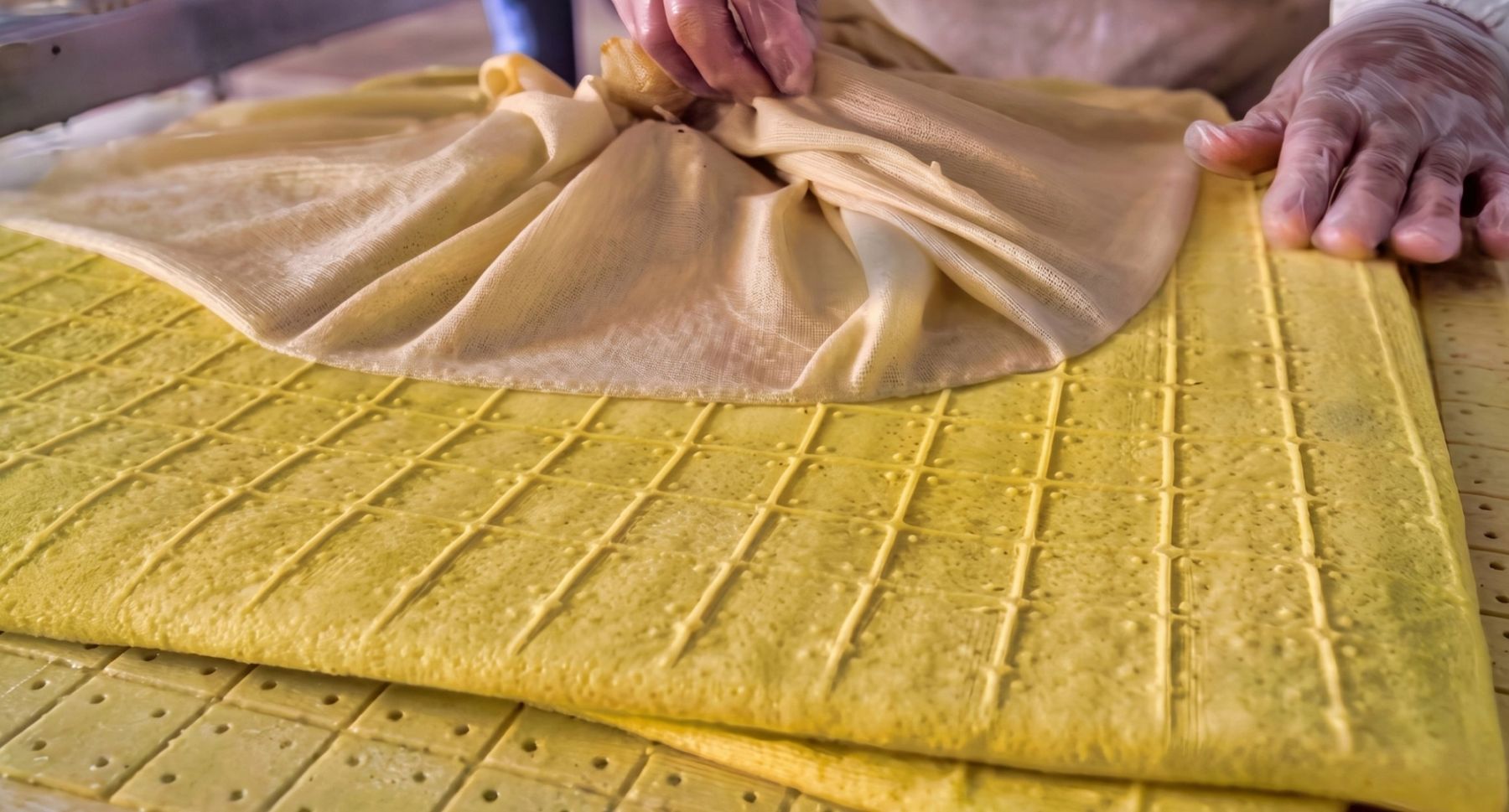
A tofu customer may return for a particular softness, a familiar flavor, or the texture served at a favorite restaurant. For the person making it, those qualities are the entire point. For the engineer designing a production line, they are technical requirements that must be translated into a repeatable process.
That translation is where Lin Yingyi sees one of the tofu industry’s central challenges.
Lin is president of Kangdeli, a Chinese manufacturer of equipment for tofu and other soy-based foods. The company operates upstream of consumer-facing brands, designing production workflows and integrating machinery inside processing facilities.
Lin entered the sector after years in banking and consumer goods. As the daughter of Kangdeli’s late founder, she initially felt like “an outsider.” Today, she is deeply invested in the industry’s future while maintaining enough distance to question its longstanding assumptions.
Her central observation: replacing manual labor with machinery is not the same as rethinking how production works.
“A machine can take over a task and make it faster or more consistent. But mechanizing an existing process is not the same as redesigning it.”
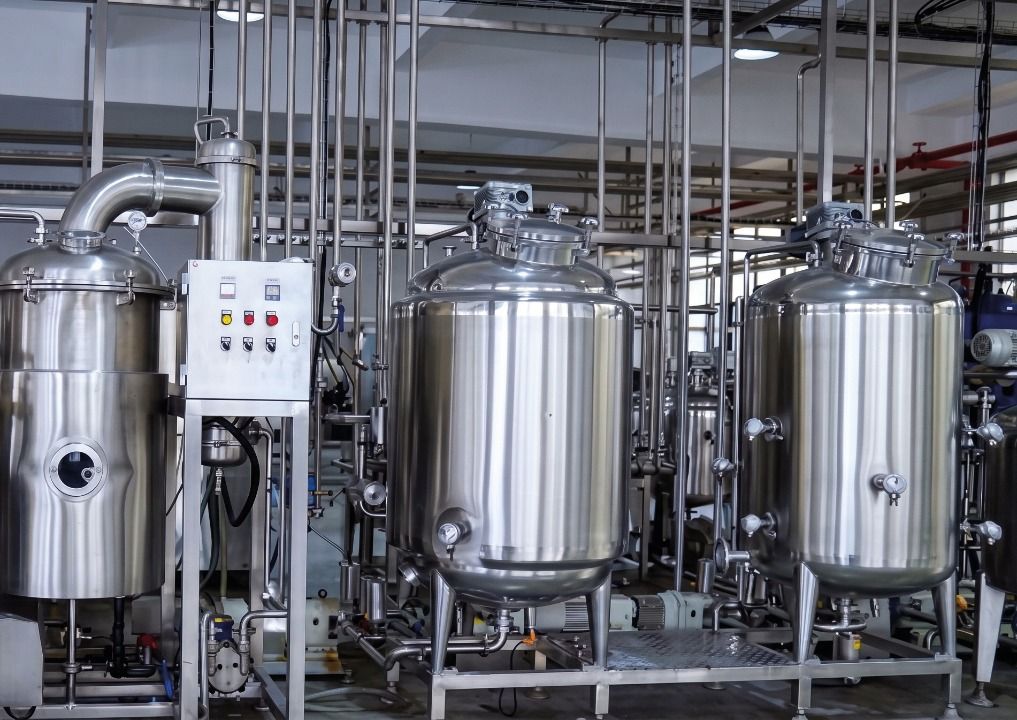
Beyond Replacing the Hand
Lin sees much of the sector’s historical development as the mechanization of established artisanal methods. While that brings clear gains in volume and consistency, she insists on interrogating what lies behind each traditional step. Why has the process evolved this way? Which exact variables dictate the final texture? Could an alternative arrangement improve consistency, consume fewer resources, or create a safer working environment?
These are engineering questions with direct consequences for the food itself.
Lin expects the machinery market to remain highly customized. Producers craft distinct regional products, rely on differing coagulation methods, and serve consumers with specific cultural palates. A line optimized for one facility often requires extensive engineering modifications before it can operate in another.
Customization reflects genuine culinary traditions worth preserving. The difficulty, in Lin’s view, is that the sector still lacks shared vocabularies and standardized metrics to define those requirements. Operational knowledge frequently remains trapped with an individual master, workshop, or legacy machine, making it difficult to institutionalize or transfer.
That leaves two distinct questions around standardization: Can a producer reliably replicate the specific product it has chosen to make? And which underlying methods, if any, should the broader industry share?
Lin envisions several production models coexisting: large-scale industrial manufacturing, regional producers safeguarding local specialties, and emerging product formats derived from soybeans and tofu processing. These models serve fundamentally different purposes rather than occupying sequential rungs on a single ladder of progress.
When the Market Reaches the Factory
Some pressure for greater consistency comes from further down the supply chain. Driven in part by extended ambient and chilled shelf lives, regional producers are expanding beyond their traditional distribution radii. Supermarkets and restaurant chains, meanwhile, are demanding tighter delivery schedules and stricter specifications. Those commercial expectations travel upstream through the factory to equipment designers.
Serving an expanded market imposes a different discipline from supplying a local neighborhood. A staple product must now remain uniform across production batches, long transit routes, and disparate retail points. Yet clear technical communication does not always flow smoothly in reverse.
Lin points to a common breakdown: a retailer conveys a sensory demand to a food manufacturer; the manufacturer converts it into a machine specification; the equipment maker then interprets that specification internally. At each handover, critical context is lost. By the time an engineer receives the brief, it often describes an assumed technical solution rather than the actual problem it was intended to solve.
Kangdeli has focused on bridging that gap by investigating the root intent behind equipment orders, including what retailers and consumers genuinely expect from the finished food. Lin advocates for direct, ongoing dialogues among machinery builders, processors, and retail buyers during early product development. That collaboration requires equipment engineers to understand food chemistry and culinary behavior as deeply as mechanical engineering.
Between a Trial and a Production Run
At Kangdeli’s R&D center, Lin says, the company works with research institutes on product experiments and equipment trials. Making a product during development can help engineers identify which stages are difficult to control. It gives them something more tangible to work with than a specification alone.
“We often use our staff canteen as a testing ground, inviting colleagues and visitors to sample products still under development. Immediate feedback and open discussion accelerate iteration.”
Yet testing individual steps in a pilot facility does not simulate the continuous stress of a commercial factory floor. The two environments must be integrated through ongoing field partnerships. That distinction is critical when evaluating innovation: a successful laboratory trial proves technical feasibility, but it does not guarantee that a product can run reliably under high-volume factory conditions or sell at an economically viable margin.
Lin remains interested in alternative formats such as tofu noodles, savory plant-based sausages, and frozen desserts, viewing them as valuable intersections between product development and processing technology. But she treats them as conceptual hypotheses to test against real consumer demand, not guaranteed avenues for growth.
Her near-term priorities remain firmly operational: reliable yields, reduced manual handling, lower thermal and electrical energy consumption, and uncompromising operator and food safety. She also targets better utilization of process water and secondary streams, notably okara (soybean pulp). These operational milestones demand different performance benchmarks. A novel food concept may capture headlines, but reduced water footprints and safer working conditions are equally enduring.
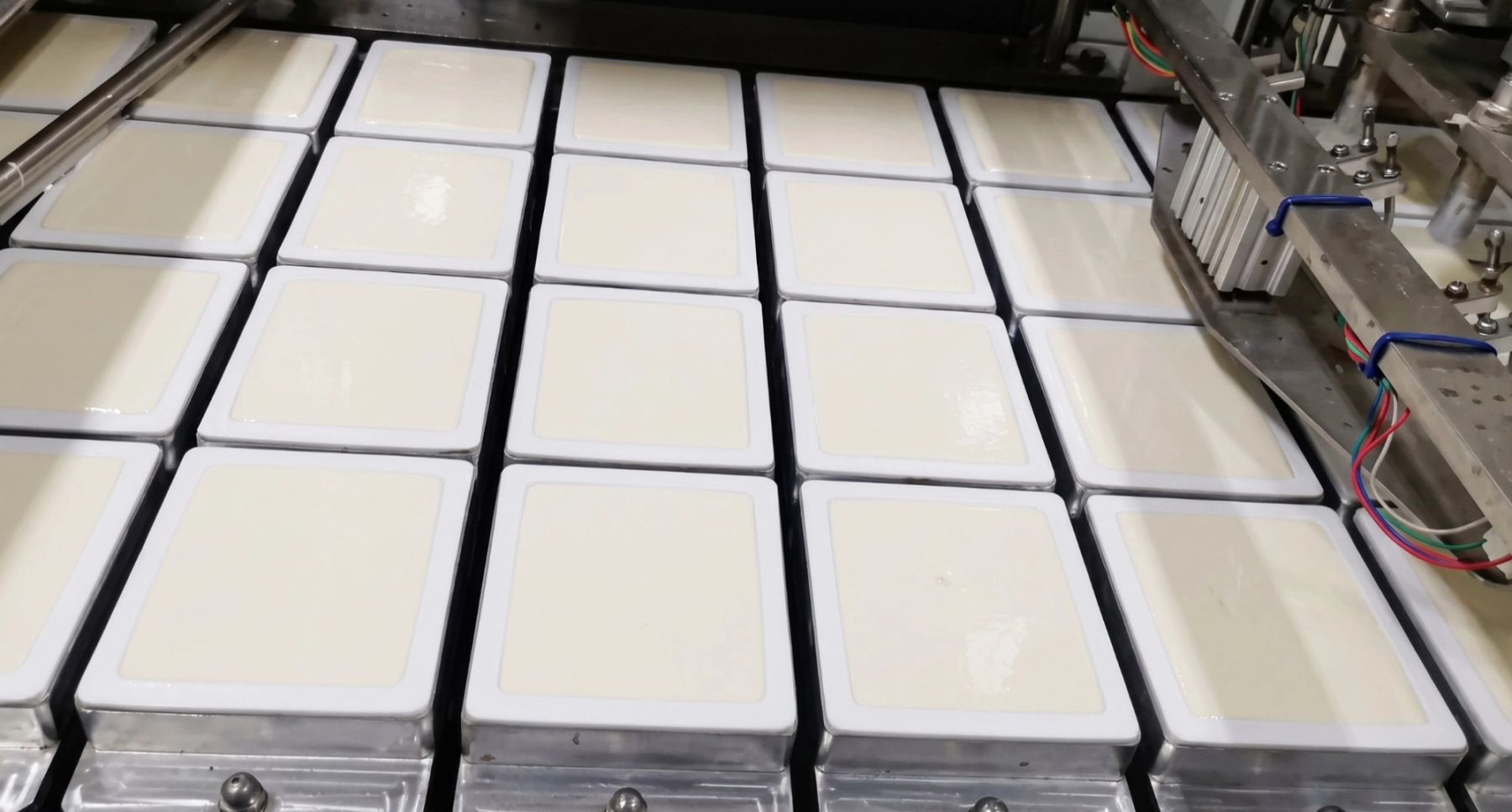
The People Behind the Machinery
Asked what makes progress difficult, Lin returns to people.
She believes the soy sector urgently needs multidisciplinary engineers and food scientists, particularly talent with experience in advanced pharmaceutical or broader dairy processing. Because customized manufacturing relies heavily on empirical know-how, much of that expertise remains tacit—rarely codified or shared systematically across the industry.
Her interest in international partnerships stems from a similar desire for cross-pollination. She points to European research organizations that systematically re-examine traditional agricultural processes through modern material science.
Any manufacturer evaluating new equipment will run its own balance sheet: capital expenditure, addressable market, workforce skill levels, and the flavor profile its loyal customers expect.
Ultimately, the relevant question is not whether tofu should simply become more automated. It is deciding which parts of the transformation benefit from tighter control, which artisanal variations are essential to the food’s identity, and what justifies altering a process that already satisfies its community.
From Lin’s upstream viewpoint, these questions initially manifest as machinery blueprints. Yet their impact extends much further to the operators on the line, the business sustaining the enterprise, and the diner seeking a specific block of tofu.
Fulfilling the promise of a more disciplined process requires more than modern machinery. It depends on how precisely food producers, engineers, and buyers can articulate, and mutually respect, what that food is meant to be.
“We pair structural innovations with disciplined, incremental refinements. At the end of the day, equipment has to fulfill our customers' real-world needs: it must be practical, reliable, and commercially viable.”
This story first appeared in TOFUWARD Issue 01.