
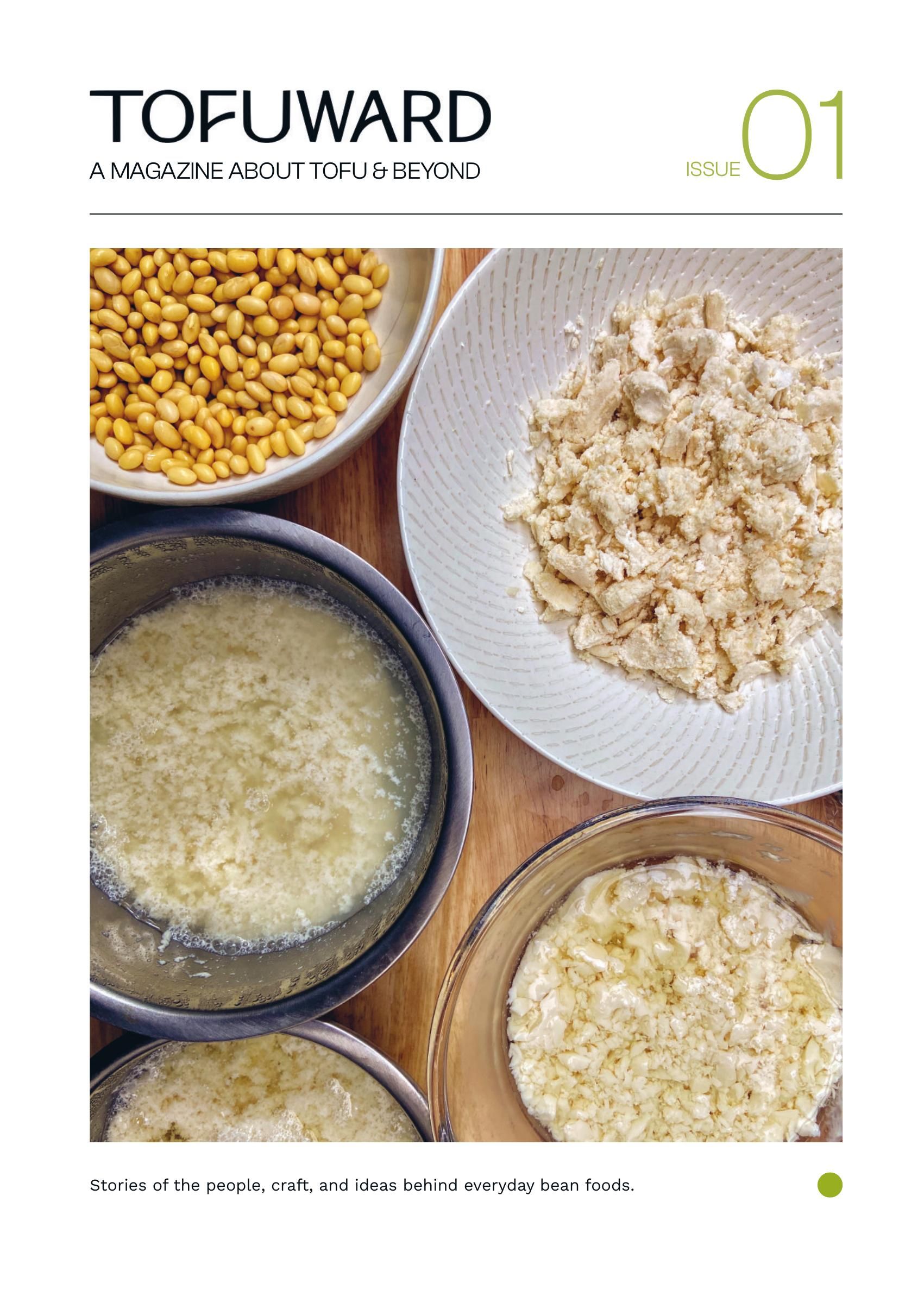
TOFUWARD Issue 01
Stories of the people, craft, and ideas behind everyday bean foods.
- A Starter of Her OwnQi Guifang spent five years developing a tempeh starter she could rely on. Now she is preparing a new product to help more people try tempeh, one crisp at a time.
- A Green Soybean, A Fresh StartAfter a difficult first venture, Liu Bin started over with an unfamiliar green soybean, seeking to recreate the aroma of his childhood and adapt it to contemporary tastes.
- Sweet and SavoryWhat can tofu be? What can it create? How can it be useful more creatively? These questions lead to bold experiments at Tofu?Tofu!, a tofu-themed dessert shop in Hangzhou, China. From flavor and texture, to mouthfeel and look, a college student is pushing the boundary of tofu in pastry.
- Tofu Was in Paris a Century AgoTofu is never made in the abstract or isolation. It takes shape within a city’s particular fabric: its soybean supply, water, immigrant communities, and changing rhythms of life. Every city that makes room for tofu reshapes it.
- What Would It Take to Improve the Infrastructure of Tofu Making?Tofu makers want equipment that can reproduce the qualities their customers value. But translating those qualities into reliable production takes more than replacing handwork with machines. A conversation with Lin Yingyi, president of Kangdeli.
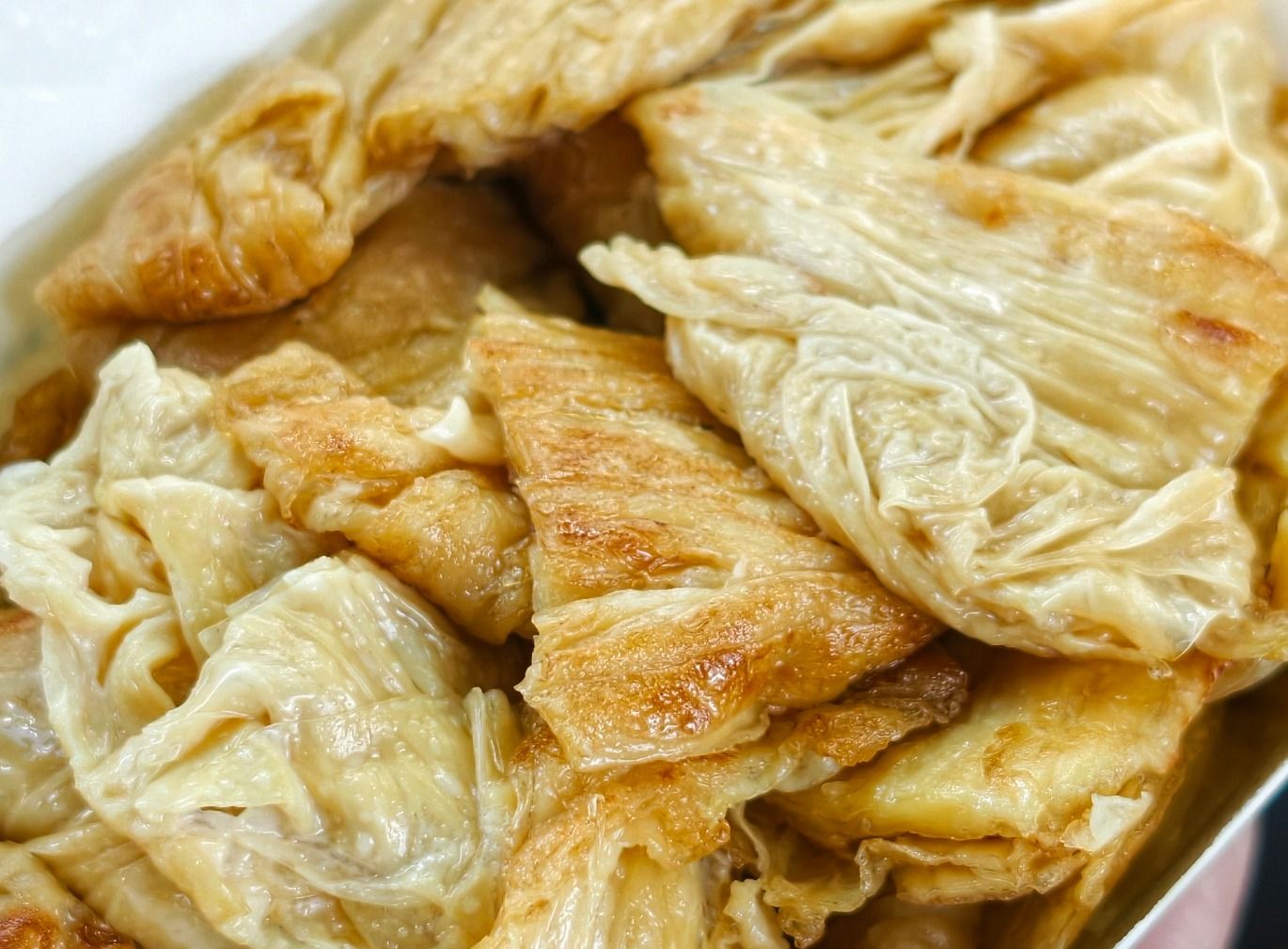
- Pressed, but No Pressure!Literally translated as "bean dried" in Mandarin, dougan is a form of pressed tofu made in styles ranging from cooking ingredients to ready-to-eat snacks.
It's Time To Move Tofu Forward
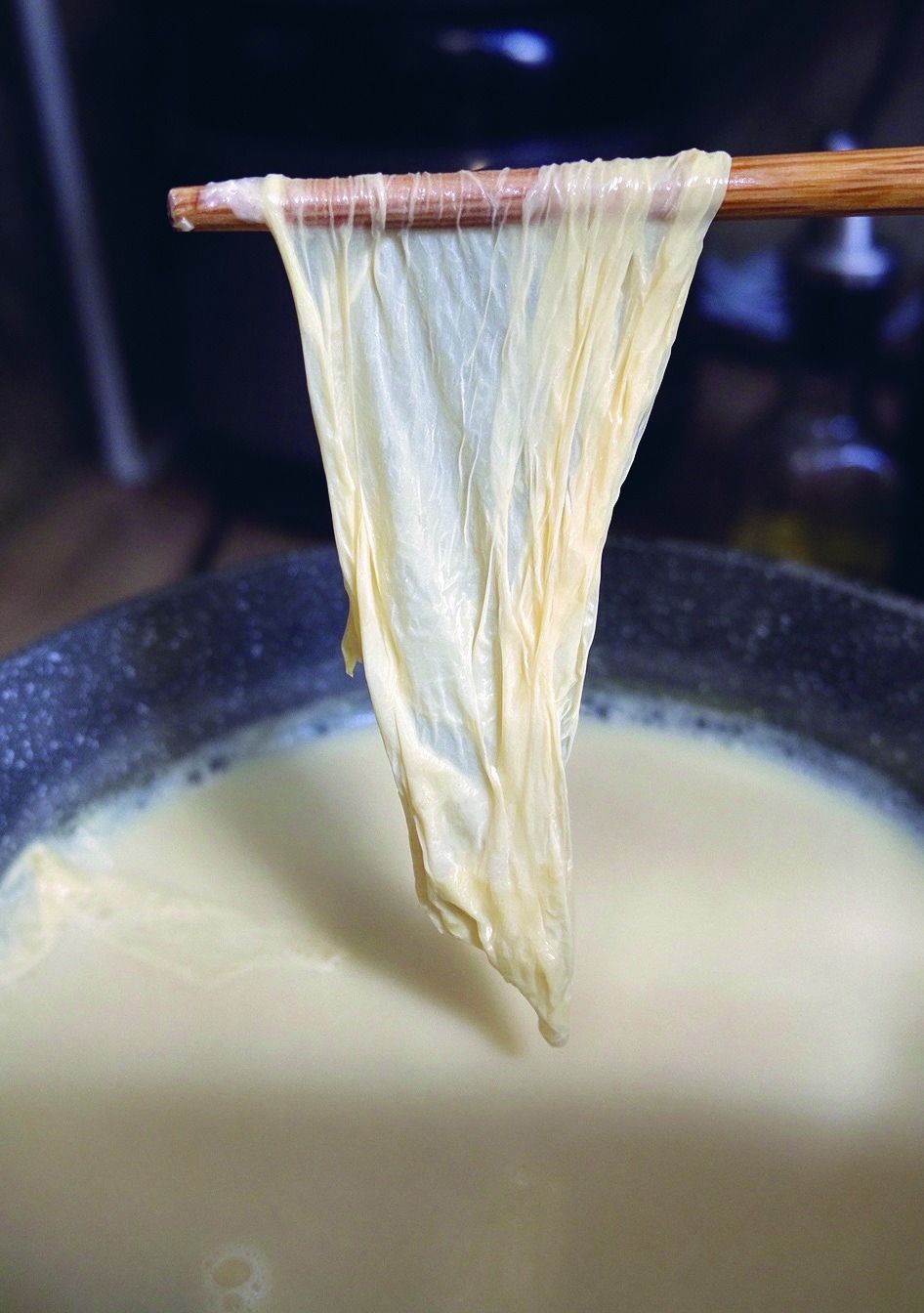
As a child, I had a cup of hot soy milk every morning. Sometimes with a little sugar stirred in, sometimes savory, with soy sauce, seaweed and scallions. Tofu and soy milk were the main sources of protein my family could afford. I was amazed by the many forms soy could take—sweet or savory, firm or soft, crunchy or chewy. Of all my childhood memories, the nutty aroma of tofu comes back first.
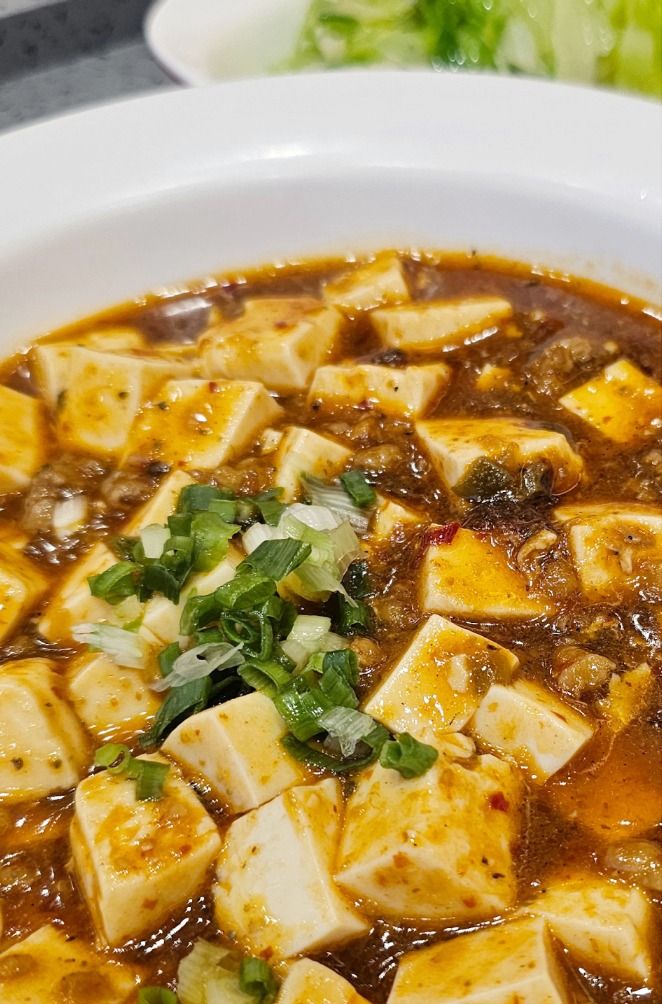
Years later, I studied cooking. Mapo tofu was the first dish my teacher taught me to make. We toasted the Sichuan peppercorns slowly, ground them, and stirred them into the chili bean paste as it sizzled. The smell filled the air. Then the silken tofu went in, pearl-white against the bubbling red sauce.
I have been eating, cooking, and making tofu for decades. I thought I knew it pretty well. But I am still discovering what this simple, unpretentious, versatile food can be.
TOFUWARD MAGAZINE began with a simple wish: to help more people discover tofu, understand its culture, and enjoy its flavors. That mission has since taken me beyond tofu itself, toward other foods made from beans, the people who make them, and the cultures around them.
Tofu’s stories range from those of global food conglomerates to those of small, family-run workshops in lesser-known places, where tofu is made and sold locally. They share one thing: each business started small.
TOFUWARD is organized into several sections. MAKERS & DOERS tells stories of tofu and other bean-food makers. WHAT’S POSSIBLE explores the many things tofu can become. POINT OF VIEW shares industry practitioners’ views of the sector and its future. TOFU AND THE CITY explores local tofuscapes to trace how tofu and cities have shaped one another. GOOD FINDS introduces bean-based products worth tasting. Together, these sections offer a glimpse of the many dimensions of tofu and tofu culture, though they are only a small part of a much larger story.
In this first issue, we travel to China, where tofu originated, and to Paris, where TOFUWARD makes its debut. We meet small-scale makers working with tofu and tempeh, encounter tofu in a boutique dessert shop, and trace a city’s tofu map. We also hear perspectives on how the tofuscape (my word for the tofu landscape) is changing, and share discoveries of bean-based foods worth trying, especially from lesser-known brands.
I hope this magazine will make room for new ideas, hidden knowledge, forgotten flavors, and questions about what works, what is difficult, and what deserves to be preserved. Something in these pages will hopefully make you curious enough to taste, cook, visit, or ask another question. Perhaps it will be a food you have never encountered. Perhaps it will be a familiar piece of tofu, seen a little differently.
Another goal is to give tofu a place in global conversations about food and health. Tofu may be called an “alternative protein” or a tool for “protein diversification,” but it deserves a place of its own—as a widely accessible, satisfying food. An ordinary food, for ordinary people, with extraordinary taste.
There is a lot more tofu to explore. Thank you for being here at the beginning.
Sincerely,
Enlin Zhou, your Tofu Forwarder
P.S.
This issue came together in less than a month, from the first idea to the printed pages. I reported, photographed, edited, and designed it myself. A project made at that pace, by one person, is bound to have oversights and rough edges. I know this one does.
But I’m proud of it. Not because it is perfect, but because it has begun. Every magazine needs a first issue. This is ours.
The print and digital editions are being released together, though their different production timelines may mean small differences between them. Both are free to read.
If TOFUWARD interests you, I’d love to hear from you. Send your questions, suggestions, ideas for collaboration, or thoughts on what we might make together to hi@tofuward.com.
A Note on Funding and Editorial Independence
TOFUWARD is an experimental project produced on a not-for-profit basis. I covered the editorial and printing costs of this issue myself. We do not accept paid advertising or product-for-coverage arrangements, but may consider clearly disclosed sponsorship for future issues. Any sponsorship will be identified, and TOFUWARD will retain control over story selection and editorial decisions.
I conducted and wrote the interviews and stories in this issue in my role as curator. The people featured speak from their own experience. Their inclusion does not imply endorsement by TOFUWARD.
Special Thanks
My thanks to Qi Guifang, Liu Bin, Lin Yingyi, Sam Chen, and Yu Zhao for their support in bringing this first issue to life. Their generosity and contributions helped make these pages possible.