A Starter of Her Own
Qi Guifang spent five years developing a tempeh starter she could rely on. Now she is preparing a new product to help more people try tempeh, one crisp at a time.
- Maker
- Qi Guifang
- Brand
- Maomao Douban
- Product
- Raw tempeh, ready-to-eat tempeh slice, chip and sauce
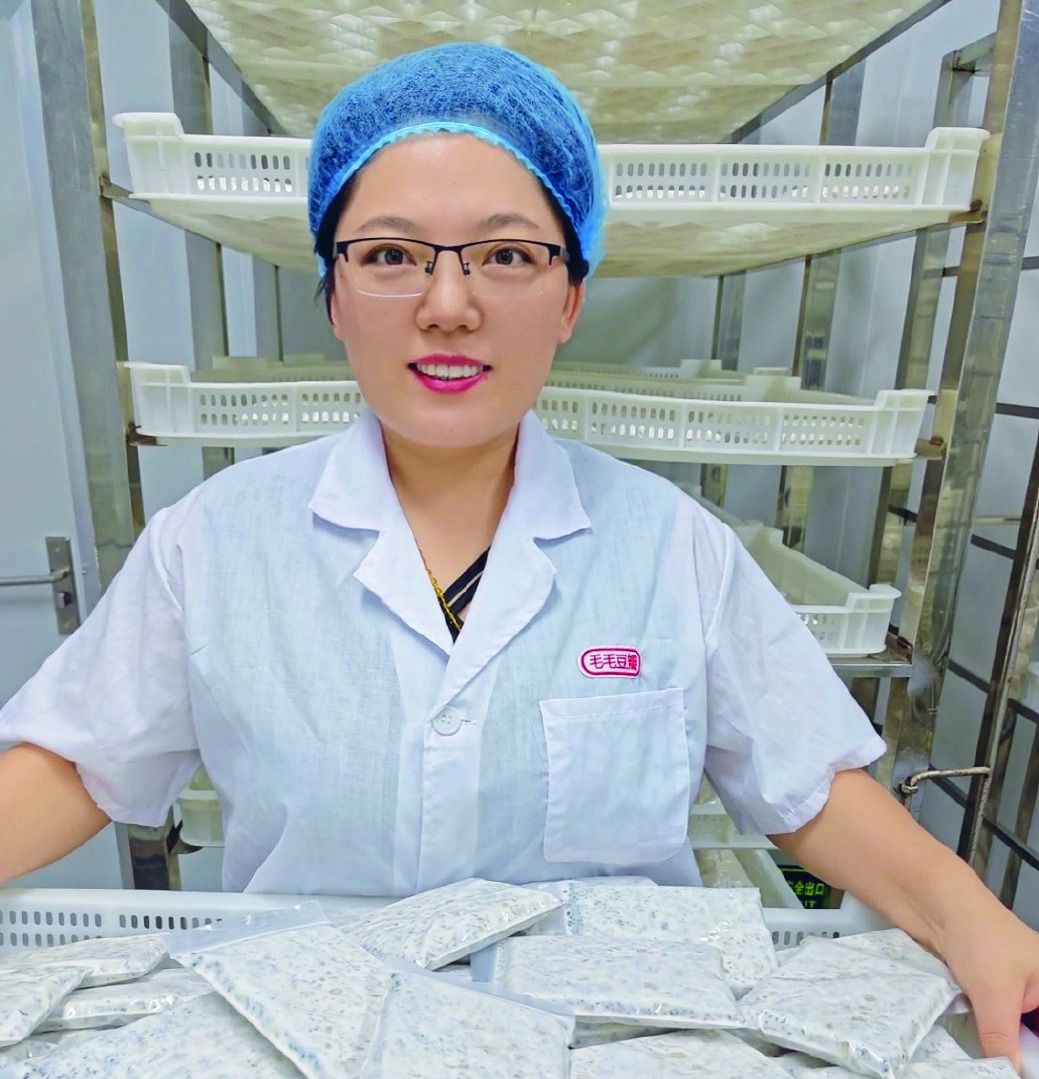
Qi Guifang fried a slice of tempeh until it was the color of a honey biscuit. She drained it, set it in a small bowl, and carried it back to the fermentation room.
Before long, fresh white mycelium appeared on the surface.
Qi tells the story almost as a joke. Years earlier, when she began making tempeh, she could not find a dependable supply of its starter in China. She could get small amounts from abroad through friends, but not enough to build a business around. In late 2011, she began trying to make the culture herself, even though she had never studied biology or chemistry at school.
An Accidental Encounter
Qi had not set out to make tempeh. In 2010, she used her savings to open a small shop selling natto, the Japanese fermented soybean food. One of her regular customers, a Malaysian woman, mentioned that she wished she could buy tempeh. Qi had never heard of it. The customer showed her a photograph.
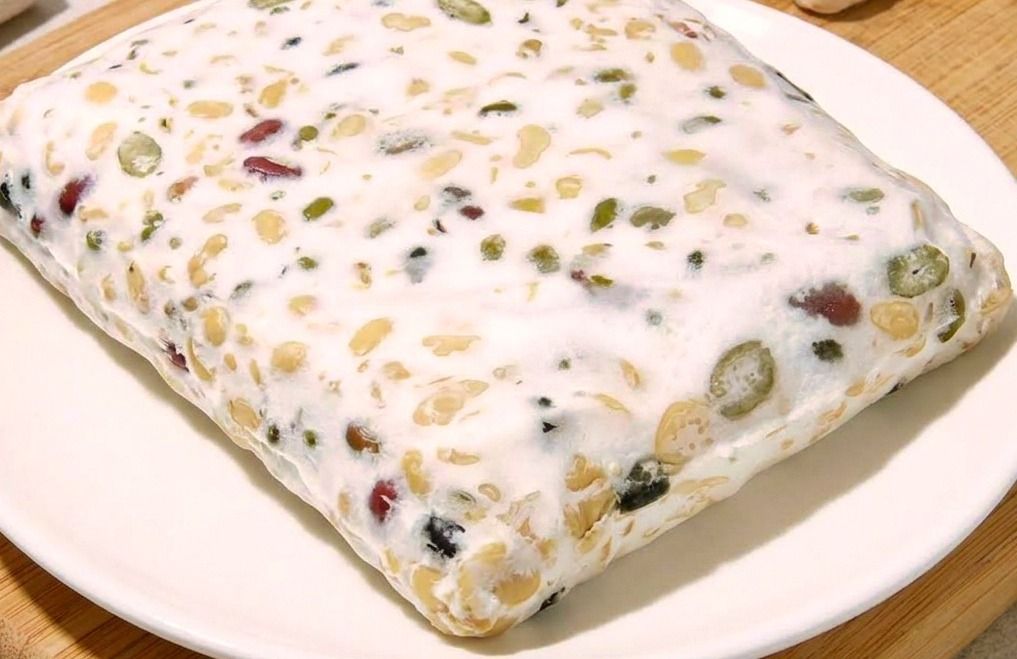
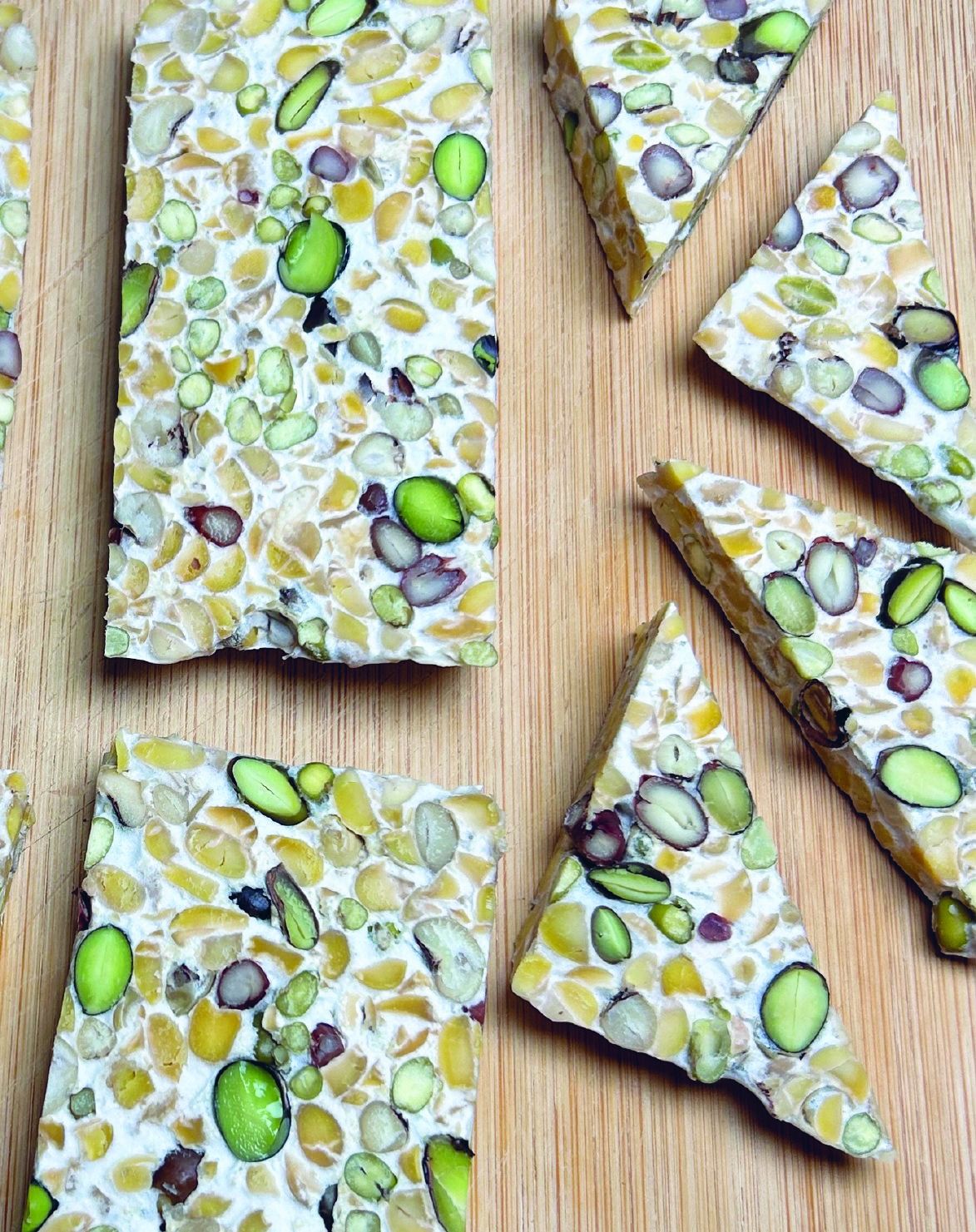
It was a white block, cut through to show the beans inside. Qi can still vividly recall the moment she saw the tempeh slice.
"Like nougat. You could see each bean clearly and beautifully."
The ingredient, soybean, was familiar, but the final product, covered in white mycelium, looked very exotic. Its appeal was obvious. "There was no need to guess about the quality of the beans. I could see it with my own eyes."
Natto had been difficult to sell. Supermarket listing fees were high, while sales stayed low. Its smell and sticky texture did not win many local customers. It was also kept and eaten cold, which might have made it a hard fit for customers accustomed to hot food. Tempeh could be steamed or fried, or cooked much like firm tofu.
The photograph gave Qi a possible new product. Making it raised a different problem.
She obtained a small amount of tempeh starter through friends abroad and began experimenting in insulated boxes. First came the soybeans. After soaking and heating them, she removed the skins by hand: she scooped the beans out quickly and pressed them with the back of a cleaver, then rinsed them until the skins washed away.
"The beans were so hot that I had to wear gloves and move very fast," she said. "Even then, I often burned my hands."
The first insulated box was enough for small experiments. Larger batches brought new problems. Qi built a bigger fermentation cabinet, then turned a small loft into a fermentation room. Each increase in volume meant learning the process again under different conditions.
As production grew, so did her dependence on a starter she could obtain only in small quantities from abroad.
She Had To Do It Herself
Qi asked several microbial-culture companies whether they could produce tempeh starter. They declined to quote the work because they saw no commercial case for it. She could continue relying on small quantities from abroad, but developing her own supply seemed the only way to scale up production.
She turned to a friend who worked in microbiology. With access to laboratory equipment, Qi and a master's student began examining how the culture responded to temperature, humidity, and its surroundings. It was hard work for Qi, as she had no formal training in biology or chemistry.
In fact, Qi dropped out of school when she was 15. In 1997, shortly before she was due to graduate from junior high, a wall fell on her father at a construction site and crushed part of his foot. He could no longer work, and the family could not afford to keep Qi in school. She left and found work as a waitress near her village.
One day, a foreign customer came into the restaurant. Qi greeted her with one of the few English sentences she knew: "How can I help you?" The woman answered in fluent Mandarin and ordered mapo tofu with rice. Qi was curious: why would a foreigner who spoke fluent Mandarin appear in such a humble streetside eatery? Summoning all her courage, she started a conversation with a simple question: "What is your name?" The guest patiently replied, telling Qi her name was Maggie. She hailed from Finland and was teaching English at a college nearby.
More visits and chats followed, and the two became friends. Qi saw Maggie as her role model. Maggie was the first foreigner to voluntarily pick up trash on a local mountain; the first foreigner to have her teaching contract extended at the college; the first foreigner Qi ever met in her life, who taught her about being kind, doing good deeds, and being confident and brave.
When Maggie learned how little schooling Qi had received, she supported Qi's training in Chinese pastry-making and later in using computers. Qi remembers her advice as a way of making decisions: ask whether something is right and worth doing. If it is, commit to it over the long term.
By the time Qi began working on the starter, she had already spent years learning new trades. This time, the question was whether she could make a culture reliable enough to support production.
"The core of the core has to be the foundation," Qi said. "I wouldn't build a business on a foundation I couldn't supply."
Only after she trusted the starter did Qi formally register a workshop to produce tempeh.
A Factory, Then Another
Making tempeh was one problem. Finding premises, paying for renovations, and securing production permits took years.
Qi leased a factory site in 2018. Soon afterward, she learned she was pregnant. Renovation had to be postponed, but she continued filling orders in her old loft-turned-workshop. One month after she gave birth to her son, she was back at work carrying sacks of beans.
Renovation work resumed near the end of 2019 but was interrupted again, this time by COVID-19. After the lockdown lifted a few months later, the contractors returned with bedding and provisions and stayed at the site to finish the work. In March 2020, her workshop received a small-producer permit.
The site could not accommodate the cold storage she needed for the next stage. In 2023, Qi decided to move again. Friends urged caution: another factory meant more spending in an uncertain economy. She set a modest threshold for the move. If the new site could sustain the business she already had, that would be enough.
She leased the new factory in August. After three months of design and renovation, she finally obtained the official food-production license, making hers one of a handful tempeh factories in China to operate with such a license.
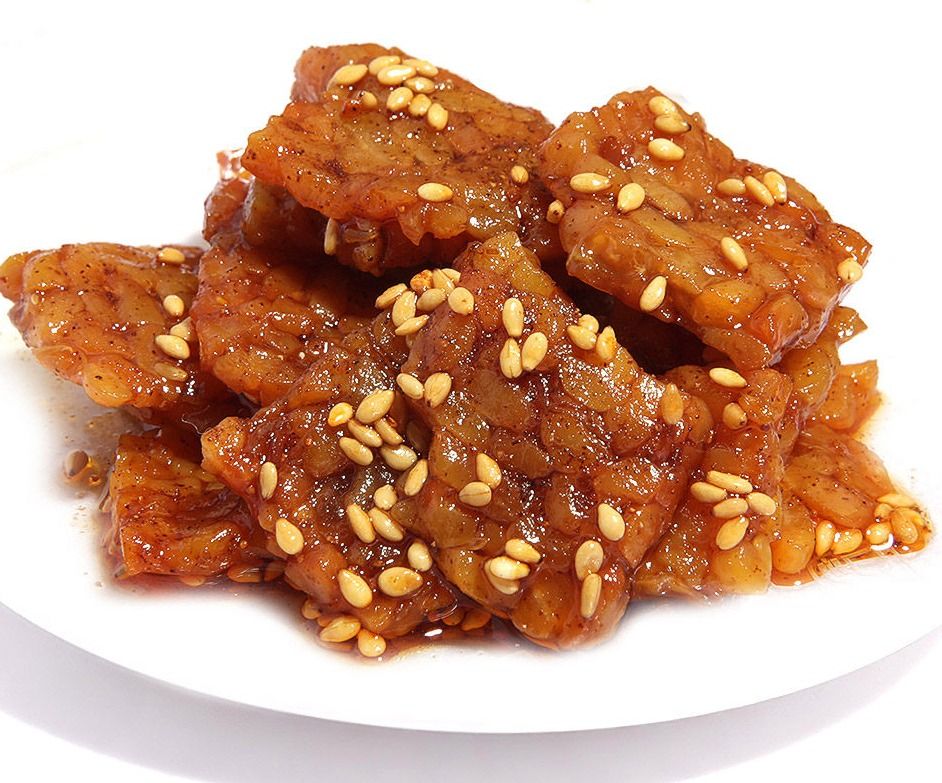
Her ambition has not stopped there. She recently ordered an eight-meter frying line, with plans to launch a separate brand and try to place tempeh crisps in mainstream supermarkets.
"Crisps may be an easier introduction for customers who do not know what tempeh is or how to prepare a fresh block. I hope an easy first taste might lead some of them to try tempeh in other forms."
She is also considering tempeh patties, balls, and crisp-coated bites, preferably made from fresh tempeh. The line has to be installed, the products tested, and customers found beyond the circle that already knows her work.
She has also started thinking about exporting these products. "To export, I need to first improve my English," she said enthusiastically. She has learned almost everything about tempeh production and running a business on her own. Perfecting English is just another challenge she is ready to take on. She gave herself an English name, Maggie, to remember her friend Maggie, who showed her a new world.
This story first appeared in TOFUWARD Issue 01.