
Tofu Was in Paris a Century Ago
Tofu is never made in the abstract or isolation. It takes shape within a city’s particular fabric: its soybean supply, water, immigrant communities, and changing rhythms of life. Every city that makes room for tofu reshapes it.
Over centuries, tofu has traveled with people and food traditions, taking on new forms in cities around the world. It has followed diaspora communities in search of familiar tastes, entered industrial zones where makers adapted production to new equipment, and found a place in urban kitchens where people are rethinking their sources of protein.
A city does not simply consume tofu. It changes how tofu is made, sold, and eaten. High rents can push workshops to rethink space and logistics. Cold chains shape how far fresh tofu can travel. Changing work patterns can turn a morning staple into a packaged snack eaten on the go.
TOFU AND THE CITY is an ongoing inquiry into these exchanges. In each episode, we trace a city’s tofuscape, from historic factories and neighborhood shops to the people and businesses shaping how tofu is made and eaten today.
We begin in Paris, where the TOFUWARD Magazine makes its debut.
The Factory in the Suburbs of Paris
Well before today’s language of plant-based protein, a young Chinese scholar in Paris set out to build a food business around soybeans.
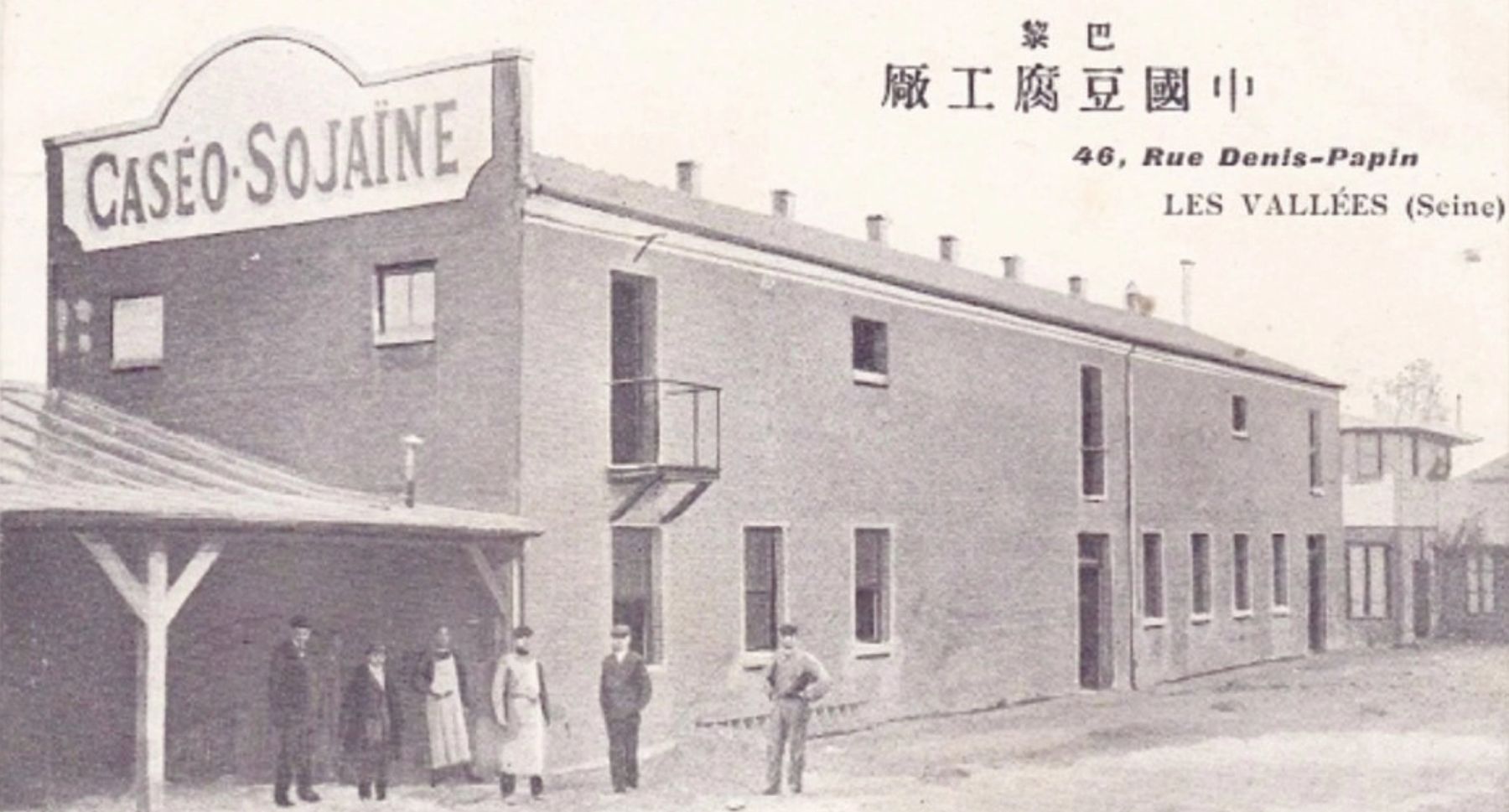
Trained in agriculture and science in France, Li Shizeng, also known as Li Yu-ying, saw the soybean not merely as an Eastern culinary tradition, but as a resource that could be studied, processed and utilized for nutrition. In 1908, he founded what became known as the world’s first “soy dairy”, called Usine de la Caséo-Sojaïne. The soy-food factory was situated in a brick building at 46-48 Rue Denis Papin in the northwest outskirts.
In his writing, Li presented soy milk as an affordable alternative to cow’s milk, and tofu as a nutritious food accessible to people who could not afford animal products. These were arguments about food and public health, but also about production. If soy could be processed reliably, he believed, it might become useful well beyond the communities that already knew how to eat it.
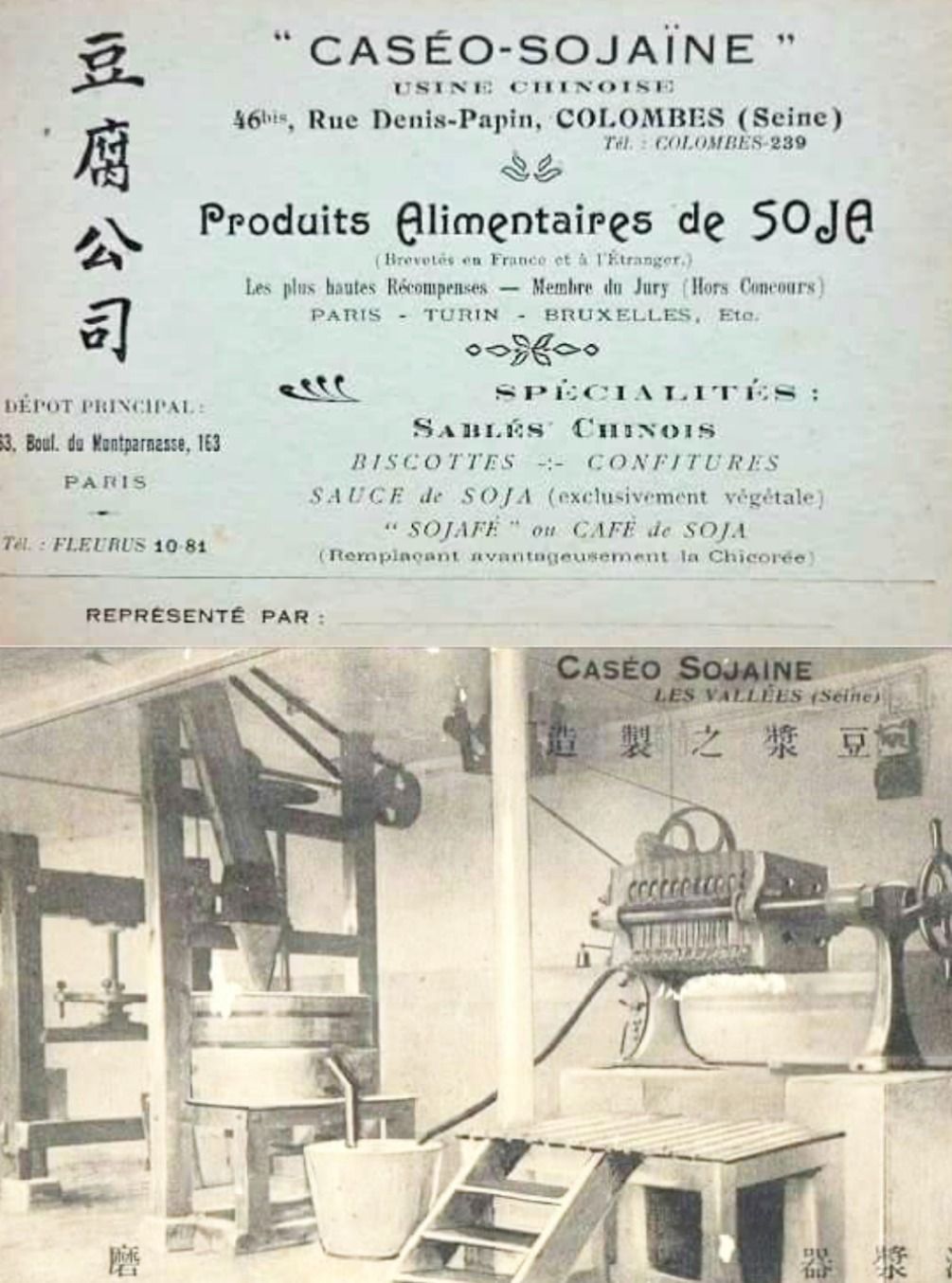
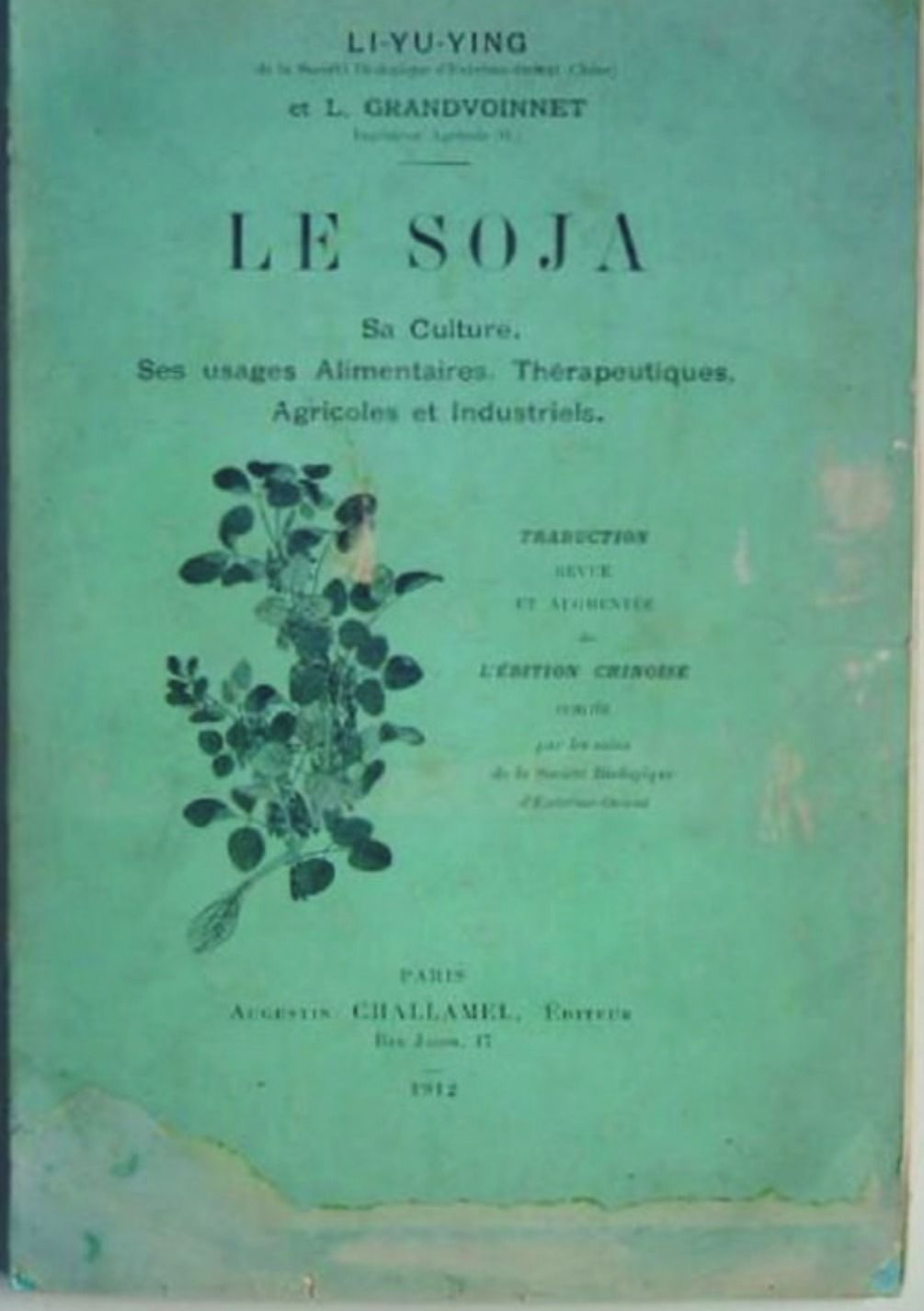
His Parisian factory was an ambitious technological experiment, where Li and his team developed modern equipment for turning soybeans into soy-based products. The product line extended beyond fresh soy milk and tofu. Soy flour and biscuits are examples that were popular. He patented industrial processes for extracting vegetable casein and mechanizing coagulation. In 1912, Li and agricultural engineer L. Grandvoinnet collected their articles as Le Soja, methodically presenting Western readers with chemical analyses, caloric yields, and processing schematics.
The factory also had a social purpose. It was an early exercise of the Mouvement Travail-Études (the Diligent Work-Frugal Study Movement), which brought hundreds of young Chinese students to France to work on production lines by day and study science and politics by night. Grinding soybeans and pressing curds were both a livelihood and an intellectual project. There was a belief that such an ancient, unassuming bean could modernize dietary structures and finance an exchange of global ideas.
The commercial story was more complex. In a 1915 telegram to his friend Wu Zhihui, Li reported that tofu sales had risen sharply, from an average of about 500 pieces a month during the company’s first five years to about 10,000 a month that year, with some months exceeding 17,000. In 1916, the factory suspended operations under wartime conditions.
The factory’s ambitions reached beyond its operations. Li had tried to translate soybeans into the language of modern science and industrial production. Tofu could be fresh or preserved, savory or sweet. Soy milk could be presented as a counterpart to dairy. And a factory producing these foods could also become a place where people worked toward an education.
Who would have thought that tofu had found a foothold in Paris more than a century ago?
This story first appeared in TOFUWARD Issue 01.